Julian Haart Riesling 1,000L 2024
Despite only four hectares of vines, Julian Haart has gone full cult. He learned under Egon Muller and Klaus Peter Keller, the two most culty figures in Germany, and his focus is squarely on tradition: steel tanks left to rust, old wood barrels (1,000-liter fuders) brought back to life. The "1,000L" is the entry tier, named for the fuder it came from, and it pulls from young vines in Piesporter sites including Goldtropfchen. This is the heart of the Mosel, where the fruit tilts more toward melon and lychee than the peach you find further north. Dry to just fractionally off-dry, vibrant, and a brilliant introduction to one of the Mosel's most exciting young growers.
Product Information
Product Information
Shipping & Returns
Shipping & Returns
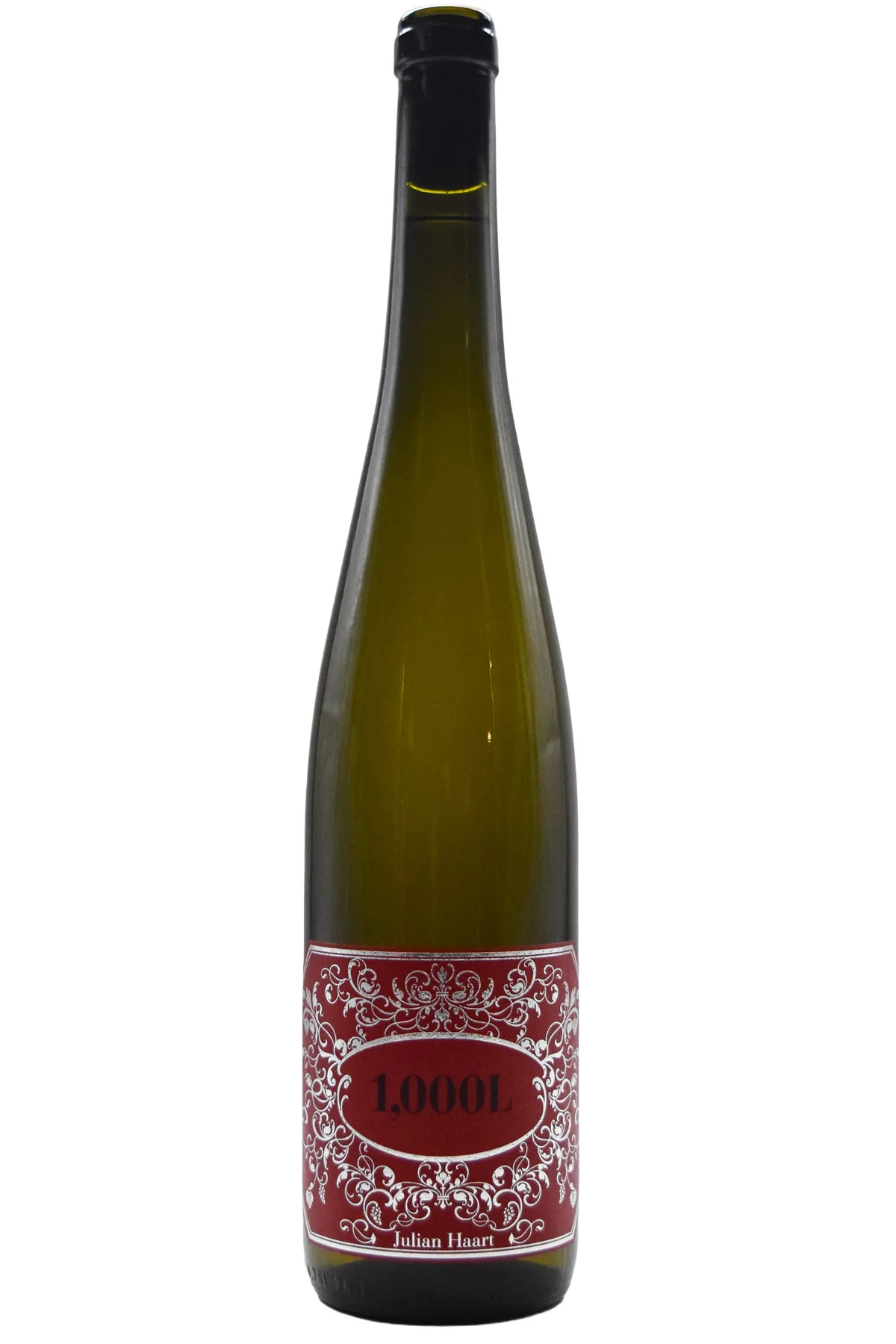
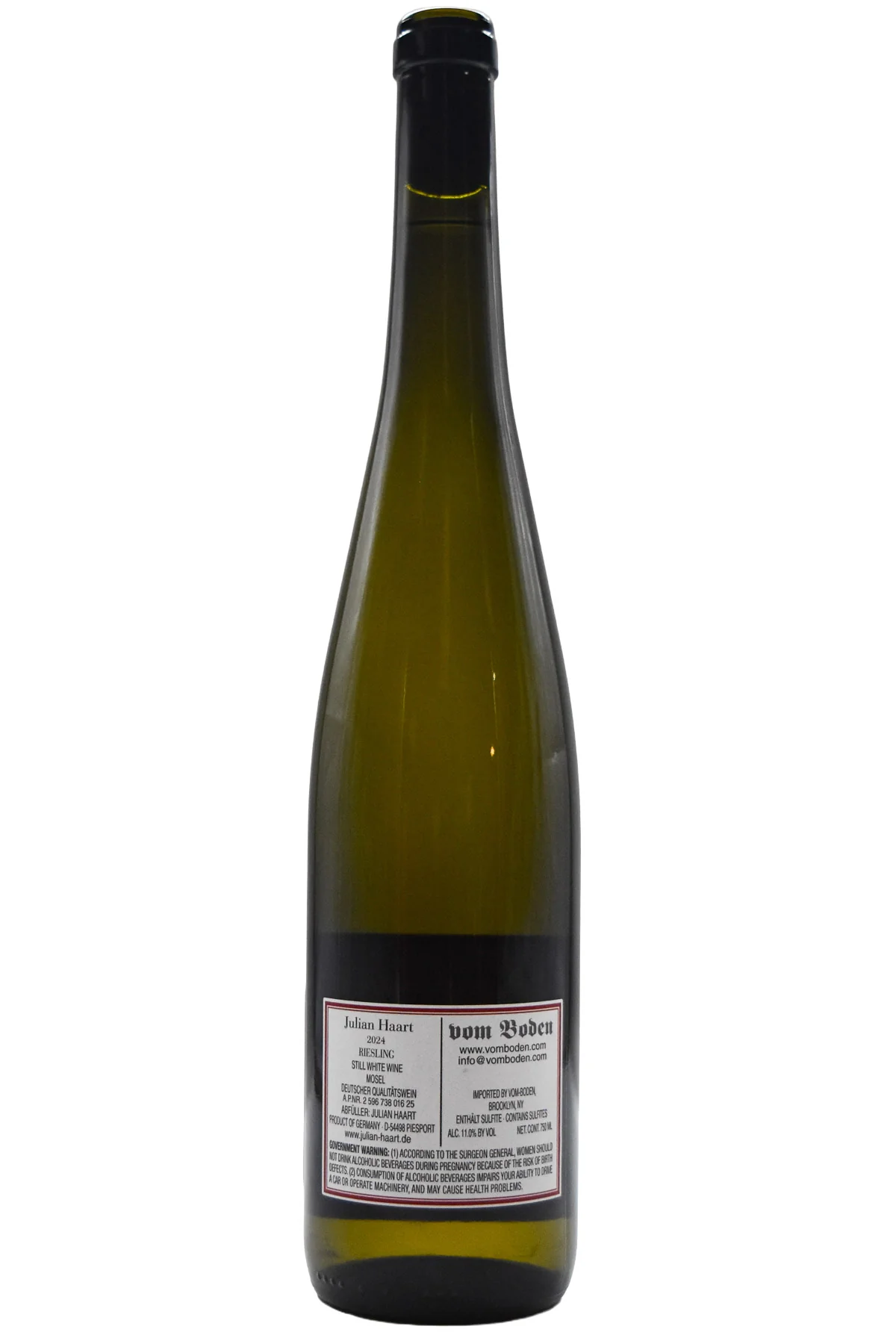
Julian Haart Riesling 1,000L 2024
Julian Haart Riesling 1,000L 2024
Despite only four hectares of vines, Julian Haart has gone full cult. He learned under Egon Muller and Klaus Peter Keller, the two most culty figures in Germany, and his focus is squarely on tradition: steel tanks left to rust, old wood barrels (1,000-liter fuders) brought back to life. The "1,000L" is the entry tier, named for the fuder it came from, and it pulls from young vines in Piesporter sites including Goldtropfchen. This is the heart of the Mosel, where the fruit tilts more toward melon and lychee than the peach you find further north. Dry to just fractionally off-dry, vibrant, and a brilliant introduction to one of the Mosel's most exciting young growers.
Original: $37.99
-65%$37.99
$13.30Product Information
Product Information
Shipping & Returns
Shipping & Returns
Description
Despite only four hectares of vines, Julian Haart has gone full cult. He learned under Egon Muller and Klaus Peter Keller, the two most culty figures in Germany, and his focus is squarely on tradition: steel tanks left to rust, old wood barrels (1,000-liter fuders) brought back to life. The "1,000L" is the entry tier, named for the fuder it came from, and it pulls from young vines in Piesporter sites including Goldtropfchen. This is the heart of the Mosel, where the fruit tilts more toward melon and lychee than the peach you find further north. Dry to just fractionally off-dry, vibrant, and a brilliant introduction to one of the Mosel's most exciting young growers.