Racines Sta. Rita Hills Chardonnay Sanford & Benedict Vineyard 2020
These are the oldest Chardonnay vines in the Sta. Rita Hills, planted at Sanford & Benedict in 1971, back when the idea of great California Chardonnay this far south was borderline eccentric. Racines - the Burgundian team of Etienne de Montille and Brian Sieve - farms a parcel of that original planting on a gently north-facing slope of thin shale and chert soils. The winemaking is deliberately restrained: fermentation across puncheons, barrels and barriques with about 30% new wood, then a year in barrel and another seven months resting on its lees in tank. What comes out is savory rather than showy, mineral rather than buttery. This is a serious white that rewards patience, either in the decanter or in the cellar.
Product Information
Product Information
Shipping & Returns
Shipping & Returns
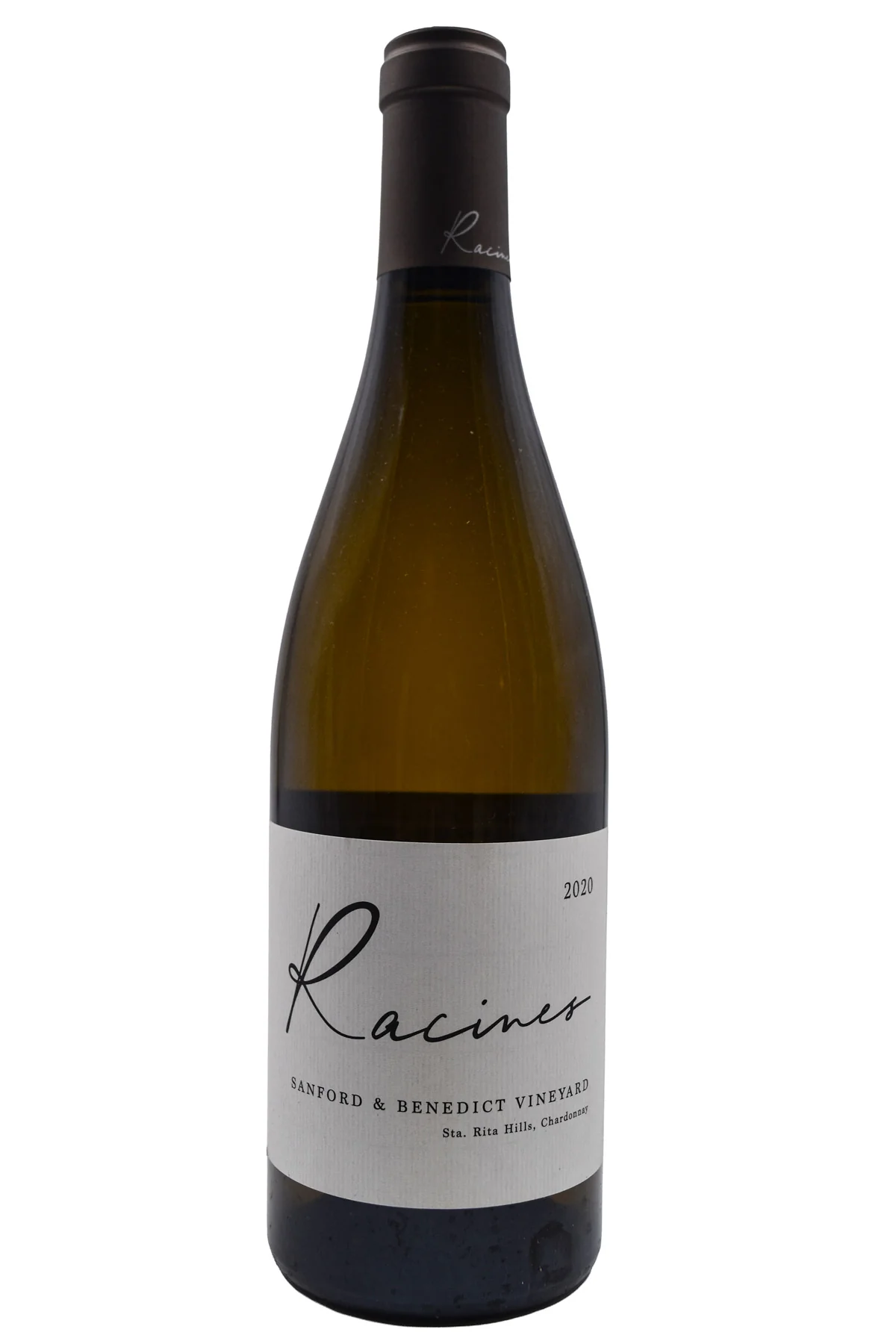
Racines Sta. Rita Hills Chardonnay Sanford & Benedict Vineyard 2020
Racines Sta. Rita Hills Chardonnay Sanford & Benedict Vineyard 2020
These are the oldest Chardonnay vines in the Sta. Rita Hills, planted at Sanford & Benedict in 1971, back when the idea of great California Chardonnay this far south was borderline eccentric. Racines - the Burgundian team of Etienne de Montille and Brian Sieve - farms a parcel of that original planting on a gently north-facing slope of thin shale and chert soils. The winemaking is deliberately restrained: fermentation across puncheons, barrels and barriques with about 30% new wood, then a year in barrel and another seven months resting on its lees in tank. What comes out is savory rather than showy, mineral rather than buttery. This is a serious white that rewards patience, either in the decanter or in the cellar.
Original: $79.99
-65%$79.99
$28.00Product Information
Product Information
Shipping & Returns
Shipping & Returns
Description
These are the oldest Chardonnay vines in the Sta. Rita Hills, planted at Sanford & Benedict in 1971, back when the idea of great California Chardonnay this far south was borderline eccentric. Racines - the Burgundian team of Etienne de Montille and Brian Sieve - farms a parcel of that original planting on a gently north-facing slope of thin shale and chert soils. The winemaking is deliberately restrained: fermentation across puncheons, barrels and barriques with about 30% new wood, then a year in barrel and another seven months resting on its lees in tank. What comes out is savory rather than showy, mineral rather than buttery. This is a serious white that rewards patience, either in the decanter or in the cellar.