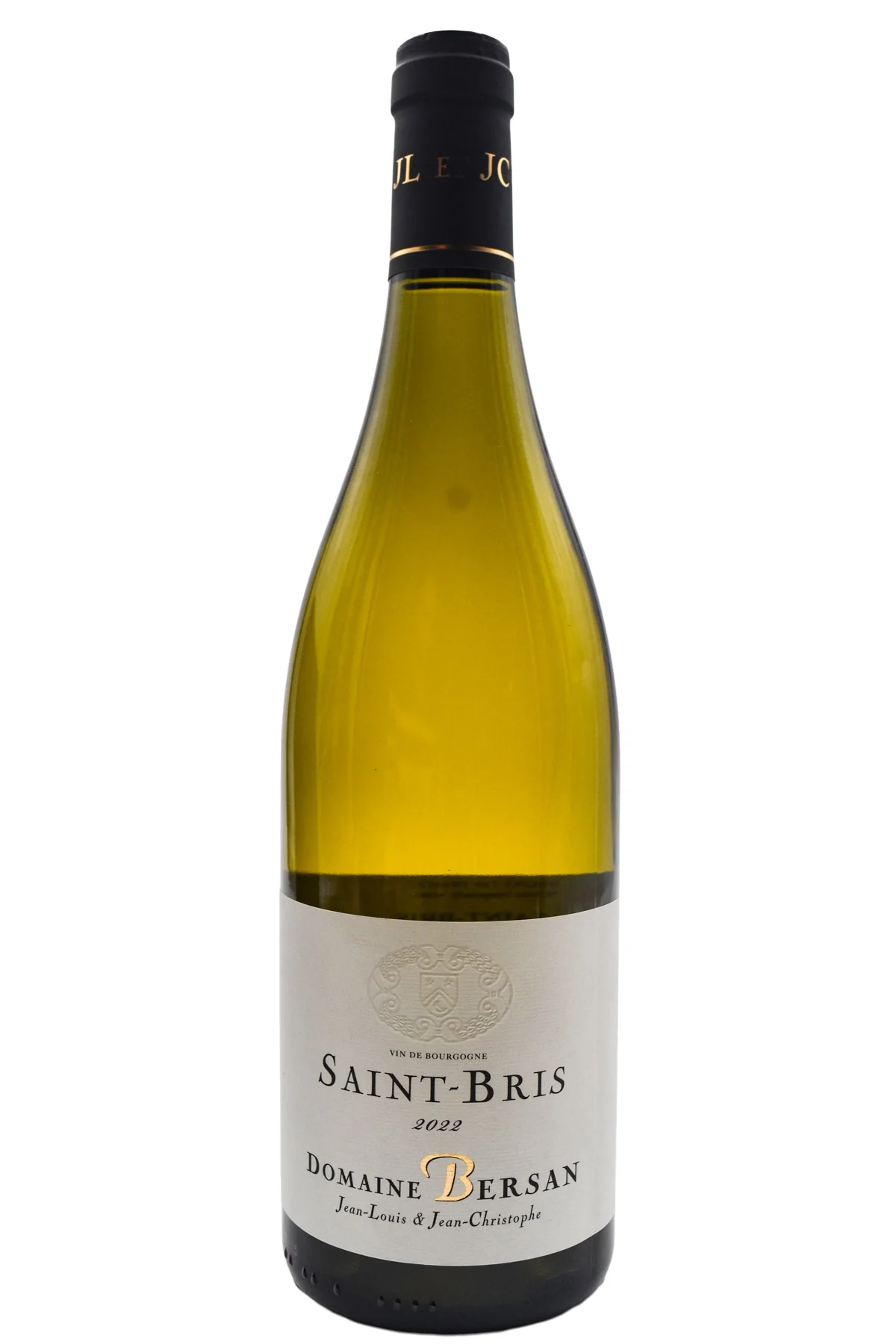
Domaine Bersan Saint-Bris 2022
Saint-Bris is Burgundy's oddball: the only appellation in the entire region planted to Sauvignon Blanc, a grape everyone else files under Loire or New Zealand. Grown here on the same Kimmeridgian limestone that makes Chablis what it is, Sauvignon behaves differently, turning steely and linear and saline instead of tropical, with a gravity that seems to come only from northern limestone. The Bersan family has roots in this corner of the Auxerrois going back to the 15th century. They farm organically, ferment with native yeasts, and leave the wine on its lees for six to eight months. Bright and racy, but never simple. Buy it next to their Cotes d'Auxerre Chardonnay and taste one soil through two very different grapes.
Product Information
Product Information
Shipping & Returns
Shipping & Returns
Domaine Bersan Saint-Bris 2022
Domaine Bersan Saint-Bris 2022
Saint-Bris is Burgundy's oddball: the only appellation in the entire region planted to Sauvignon Blanc, a grape everyone else files under Loire or New Zealand. Grown here on the same Kimmeridgian limestone that makes Chablis what it is, Sauvignon behaves differently, turning steely and linear and saline instead of tropical, with a gravity that seems to come only from northern limestone. The Bersan family has roots in this corner of the Auxerrois going back to the 15th century. They farm organically, ferment with native yeasts, and leave the wine on its lees for six to eight months. Bright and racy, but never simple. Buy it next to their Cotes d'Auxerre Chardonnay and taste one soil through two very different grapes.
Original: $19.99
-65%$19.99
$7.00Product Information
Product Information
Shipping & Returns
Shipping & Returns
Description
Saint-Bris is Burgundy's oddball: the only appellation in the entire region planted to Sauvignon Blanc, a grape everyone else files under Loire or New Zealand. Grown here on the same Kimmeridgian limestone that makes Chablis what it is, Sauvignon behaves differently, turning steely and linear and saline instead of tropical, with a gravity that seems to come only from northern limestone. The Bersan family has roots in this corner of the Auxerrois going back to the 15th century. They farm organically, ferment with native yeasts, and leave the wine on its lees for six to eight months. Bright and racy, but never simple. Buy it next to their Cotes d'Auxerre Chardonnay and taste one soil through two very different grapes.