Marco de Bartoli Sicilia Bianco Pietranera 2024
In 1989, Marco de Bartoli did something nobody on Pantelleria had thought to do: he made Zibibbo dry. The grape had been the island's dessert-wine workhorse for centuries, and turning it into a serious dry white was close to heretical. Pietranera means black stone, for the volcanic rubble the vines grow in, and it comes from a plot in the Cufura district planted in 1957 on north-facing terraces at 350 meters, where the sun is kinder. It is aromatic the way Muscat always is, but bone-dry and salty, with a faintly bitter snap on the finish that keeps pulling you back. Pantelleria is closer to Tunisia than to mainland Italy, and this tastes like it.
Product Information
Product Information
Shipping & Returns
Shipping & Returns
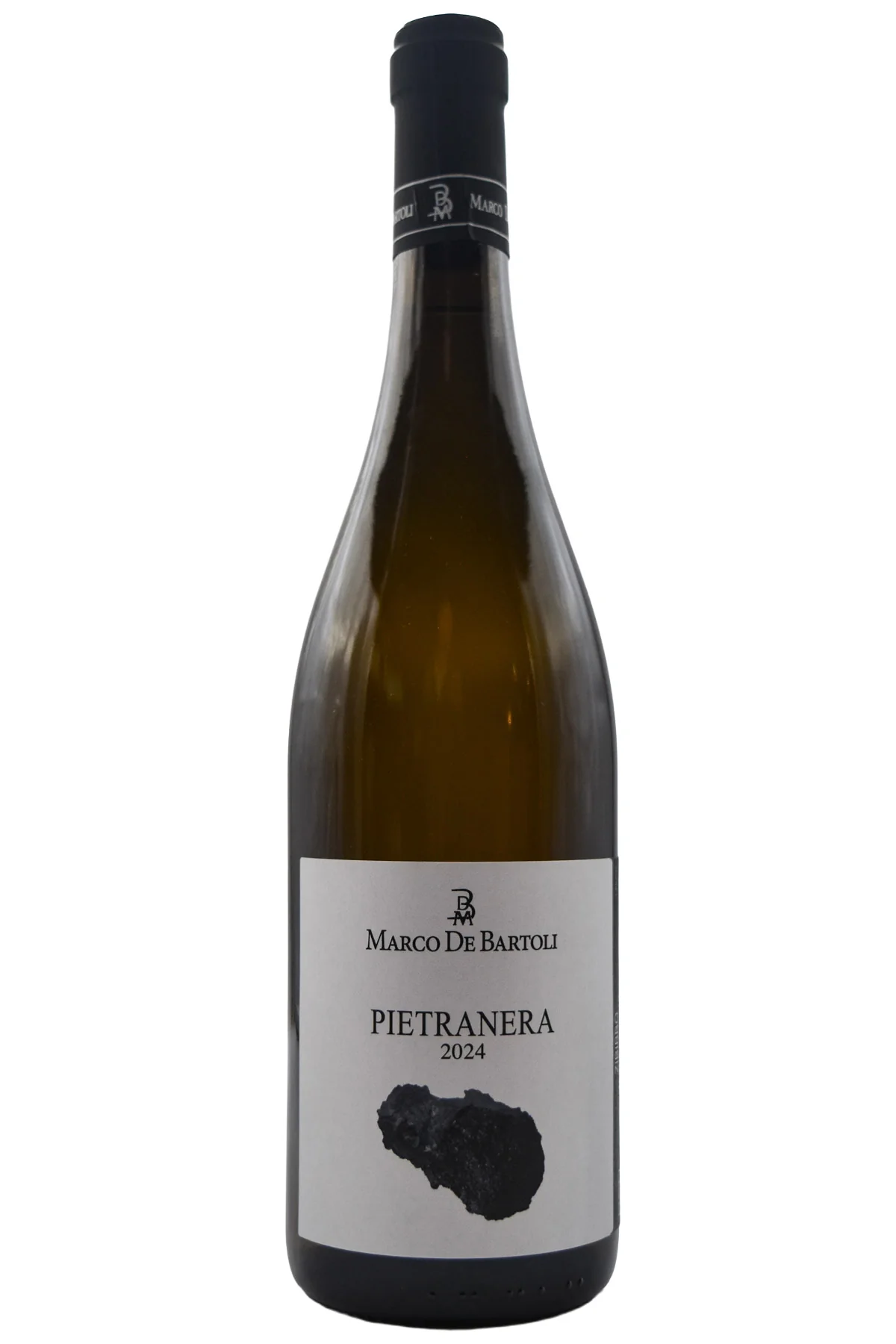
Marco de Bartoli Sicilia Bianco Pietranera 2024
Marco de Bartoli Sicilia Bianco Pietranera 2024
In 1989, Marco de Bartoli did something nobody on Pantelleria had thought to do: he made Zibibbo dry. The grape had been the island's dessert-wine workhorse for centuries, and turning it into a serious dry white was close to heretical. Pietranera means black stone, for the volcanic rubble the vines grow in, and it comes from a plot in the Cufura district planted in 1957 on north-facing terraces at 350 meters, where the sun is kinder. It is aromatic the way Muscat always is, but bone-dry and salty, with a faintly bitter snap on the finish that keeps pulling you back. Pantelleria is closer to Tunisia than to mainland Italy, and this tastes like it.
Product Information
Product Information
Shipping & Returns
Shipping & Returns
Description
In 1989, Marco de Bartoli did something nobody on Pantelleria had thought to do: he made Zibibbo dry. The grape had been the island's dessert-wine workhorse for centuries, and turning it into a serious dry white was close to heretical. Pietranera means black stone, for the volcanic rubble the vines grow in, and it comes from a plot in the Cufura district planted in 1957 on north-facing terraces at 350 meters, where the sun is kinder. It is aromatic the way Muscat always is, but bone-dry and salty, with a faintly bitter snap on the finish that keeps pulling you back. Pantelleria is closer to Tunisia than to mainland Italy, and this tastes like it.